

News

Is your wall boring? How to choose pictures for it? - Part 2
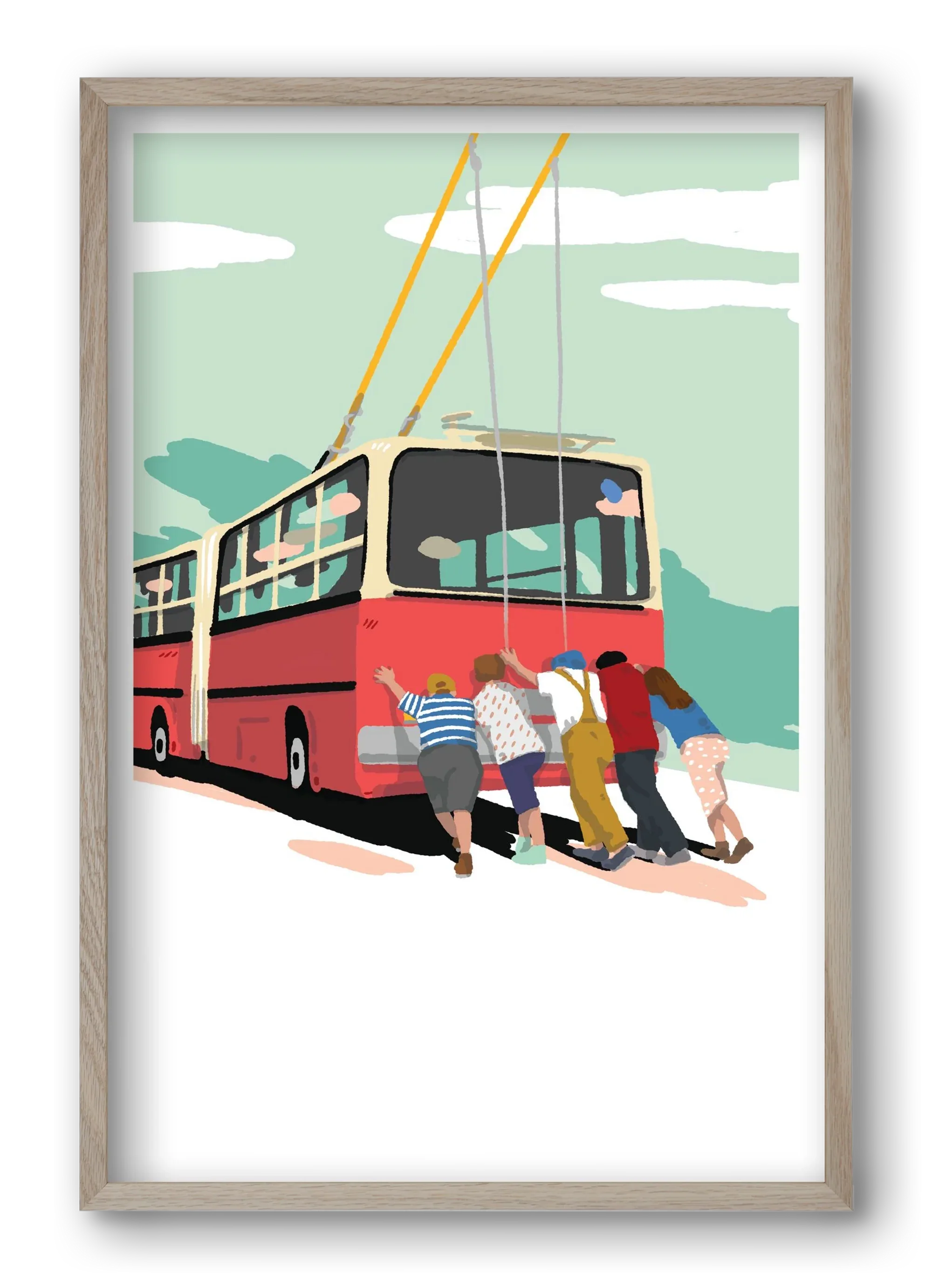
Your gallery wall will be truly unique and look great if the images, colors, and styles are in harmony and reflect your taste and mood. But how should you start selecting? Here are some tips to ensure the end result is harmonious, yet exciting and personal! Trust your taste! The first and most important piece of advice: trust your own taste! Many people are afraid of making the wrong choice or of not looking “professional” enough – but a gallery wall is special because it reflects your personality. If you like a picture, a color or a style, then it is a good choice in itself, as it brings you joy and helps you feel at home in your own space. Don’t worry about what others think: your gallery wall is not made for others, but for you. Uniqueness, personal taste and courage will make the end result much more exciting and lovable than any perfectly coordinated but impersonal decoration. Let your own style guide you – this way you will definitely have a gallery wall that you will be happy to look at every day! Feel free to mix styles and artists! One of the biggest advantages of a gallery wall is that it gives you room for creativity: you can boldly combine different styles, techniques and artists. An abstract painting can be paired with a detailed graphic, a characterful cityscape or even a playful illustration. Such diverse combinations make the wall truly exciting and unique, and provide a new experience every time you look at it. However, it is important to note that mixing styles works best with freer, asymmetrical or “random” gallery walls. Here you can play with contrasts, colors and the world of different artists – for example, a Judit Zengővári's cheerful illustrations can easily be placed alongside Enikő Eged's figurative works, or Cubism geometric poster. If you choose a more organized, grid or staggered layout, however, it is worth thinking in a more unified style. For these compositions, it is better to choose images with similar colors, themes or techniques to maintain harmony and transparency, so that the overall look of the wall remains organized and balanced. Play with sizes! When designing a gallery wall, varying the size of your images is just as important as mixing styles or colors. You can choose from two popular solutions – or even combine them! One option is to choose a larger, more prominent image as the centerpiece and arrange smaller works around it. This composition creates a dynamic, playful effect and helps create a focal point on the wall. In this case, the larger image can be a characterful abstract painting or a spectacular cityscape, while the smaller images around it complete the overall effect with fine details, illustrations, or photos. This solution works especially well in freer, asymmetrical arrangements, where the varied sizes make the wall even more exciting. Another option is to choose all images the same size and arrange them symmetrically, in a grid or in a staggered manner. This clean, orderly effect is beneficial for those who prefer harmony and transparency. In this case, it is worth choosing images with a similar style or color scheme to keep the composition consistent - for example Herceg Kinga from your black and white pictures or Henry Rivers Your travel posters also look perfect in this layout. Choose a theme and style – This is how your gallery wall will truly be yours! Your gallery wall will be truly unique if the images reflect not only your style but also the function of the room. Artbridge offers a wide range of different themes and categories, so you can easily find what really appeals to you. If you are a lover of modern, clean interiors, the geometric abstract posters and abstract artwork are a perfect choice. These images bring freshness, vibrancy and creativity to any room – be it a living room, a study or even a minimalist bedroom. " Love is love" or love-themed pictures They radiate warmth, joy and love. These motifs are perfect for couples, for a shared home, bedroom or as a gift, as they remind you of bonding and happy moments every day. If Budapest or the Lake Balaton is close to your heart, choose from posters that evoke the iconic locations and atmospheres of the city and the lake. These images are not only decorative, but also express a personal connection and can be great conversation starters for guests. THE Spring, floral images radiate freshness , optimism and renewal, bringing fresh energy to any room. Artworks depicting nature, plants and landscapes create peace and harmony, whether it's a living room, bedroom or even a bathroom. Are you an animal lover? Kitten , canine and others animal pictures they bring playfulness, joy and love into the space – to the children's room, A charming animal portrait can be a perfect choice for a living room or even a study. kitchen posters They are for gastronomy lovers: pictures of vegetables, fruits, coffee, wine or funny, motivating captions will liven up the cooking or dining scene. And the children's room will be truly friendly and inspiring if you decorate it with cute, colorful, playful illustrations, such as fairy-tale animals or cheerful figures. Remember, these are just ideas - the most important thing is that your gallery wall really speaks about you! On the Artbridge website, a wide selection of categories, themes and styles will help you find the images that best suit you and your home. Feel free to choose and make your wall truly personal! +1 TIP: Feel free to get inspired! Look around at the works of different artists, including those offered by Artbridge, where you can find works by creators of such diverse styles as: Hello Petra, Cubism or Henry Rivers . Let your own stories, memories, and dreams guide you when choosing your images – this way your gallery wall will truly be a reflection of your world. Remember: a gallery wall is not only trendy, but it also brings joy, inspiration and life to your everyday life. Start boldly – and show how creative you are! For more inspiration and tips, check out Artbridge Magazine , or follow our social media pages! In the next part of this article series, we will help you capture images simply and professionally. In the Artbridge webshop you will find many different styles of high-quality artwork that you can easily use to make your wall unique. Take a look around and choose what you like! Don't let your empty wall be the most boring part of your home! Start now - and show that you are creative! For more inspiration and tips, check out Artbridge Magazine – or follow us on social media!
Learn more
Visual Detox – How to stop media from dominating your life?
Introducing Marine Tanguy The Visual Detox - How to consume media without letting it consume you c., published in 2024 by Penguin Random House UK. The book provides an introduction to evaluating our visual environment and provides methods for filtering content, making it easier to absorb and process information. I am addicted, and I am not alone in this. Ever since I started an online business and had two young children, I have become addicted to social media. Like so many of us, the process was gradual, but it definitely started when I bought my first smartphone fourteen years ago. At first, I was very happy with the dizzying possibility of having the world in my pocket, and all the information and news coming to me instantly. Technology has really excited me (I see a similar enthusiasm for AI in many people recently). But now I have reached a point where the more I look for comforting screen content, the more tired and insecure I feel. I think this can be true for all of us, but there are situations in life that accelerate this social burnout, and being an entrepreneur with young children is definitely one of them. So there came a point when I realized the dangers of being online and started looking for solutions. I didn't want my kids to see me with a phone in my hand or for that image to remain in their memory. At the same time, my job requires me to spend some time online, and I even have to actively search for emerging artists, new styles, and interesting work. That's why I can't completely withdraw from social media. That's when I met Marine Tanguy The Visual Detox c. with his book. Marine is a successful London entrepreneur who sells art to individuals and municipalities through her agency. She is well-versed in the European art scene and is active on social media due to her work. Marine Tanguy, The Visual Detox, How to consume media without letting it consume you, Penguine Random House UK In his book, he gives insight into the history of his own visual development, explaining how our own artistic narrative is shaped by the surfaces, installations, and images around us. He offers tips on how to avoid living in a bubble and successfully filter the “things to see” so that they serve us, not the other way around. He warns with shocking statistics: the average person sees 10,000 pieces of advertising content online every day, while our brains can only process 1% of what they see. Or that every 2 seconds 1,250,000 new images are uploaded to the world wide web. This is a state of massive overload for those who exist in the online space, and we haven't even talked about the offensive content on the streets and projectors. Anyone who wants to stay normal must filter and, by playing with the algorithms of social media apps, "swim against" the tide, only allow in very limited content. In addition to adblocker tools and various app filters, he recommends many methods, but one of the most important is to dare to consciously transform our homes and our environments into places where we can recharge and where our brains can rest from what we see online. Everyone has a little idea why it's good to visually consume art, even if they don't dare go near it. A study has shown that the same brain mechanisms are activated when we immerse ourselves in an image we like as when we fall in love. It's no wonder that many artbridge customers start their emails to us by saying they're "in love" with this or that image! Every topic that interests us, globally or in our narrower community, interests artists, and their works help to highlight our perspective, make us think, or even provide a transcendent experience. When we look at a work of art, it is worth taking the time to think about how its characteristics affect us – its size, its colors, where our attention is directed, its composition and perspective. What are the distances, the orientation of individual parts and characters? And these are just the elements that are immediately noticeable. Perhaps the most important point of view is the context: in what social environment, in what period was it made, is it thought-provoking, inclusive, stimulating to action, unifying, or the opposite? What we see in our everyday lives is our art, our personal gallery, which has a direct impact on how we feel. We need to start thinking about art differently, and instead of thinking that art is somewhere else and we can’t have anything to do with it, we need to consciously build our own visual story and place it in the artistic environment that we share with our fellow human beings. The desired goal may be to create a collective environment in which everyone is represented on posters, walls, and homes – an inclusive, democratic, and inspiring world,” says Marine Tanguy. Claire Luxton: Hope, photo, 2019 The author examines in detail the purpose, contradictions, context, and hidden details of the content that surrounds us (physically and online). He practically provides an introduction to the world of art historians by sharing the concepts and perspectives that allow us to not only give ourselves a banal “like/dislike” assessment of an image, but also to analyze and look deep into it and evaluate what we see through our own filter. We can decide whether a given image and narrative serves us or is bad for us, which is why it is worth eliminating it from our environment. There is no “perfect” analysis for a work of art; everyone views the world through their own history, upbringing, and memories, which is why no two assessments and emotions are the same when it comes to human experiences. Since today's people are drowning in content of all kinds, they can defend themselves with conscious decisions and "detoxifying" steps to maintain their independence and integrity. So let's look at some examples from Marine Tanguy's book on what we can do against the overflowing stimuli! Don't turn on your phone or look at a screen in the first and last hour of your day. Start noticing/recording how much time you spend online, in shopping malls, and outdoors each day. Clean your phone of all unnecessary apps, use an adblocker on all your internet devices. Take photos of your bedroom/kitchen/study and plan how you will transform it by removing unnecessary, unpleasant elements from the interior and adding new, pleasant things and images that have a positive effect on your mind! Consciously plan your visual schedule! After watching a movie or spending a lot of time on the screen, include relaxing activities for your eyes, such as reading a book or print media, or taking a walk in nature. Have days when you don't look at a screen at all! Avoid all content that is uninspiring, uninteresting, or that only evokes negative emotions. Instead, look for inspiring, beautiful content, profiles of museums, galleries, and artists. Spend 5 minutes every day with art! Go to a museum or gallery, find a piece of art that captivates you, and think about its characteristics, its message, and how it makes you feel. Finally, surprise yourself regularly with visual changes that bring you joy and calm. This could mean a new wallpaper on your phone, new pictures on your walls, or just rearranging your bookshelf by color. Initiate conversations about what you see around you and how you would like to shape your district or town in order to live in a more livable, beautiful, and sustainable environment! Obviously, there are some of these points that we know and practice on our own, but if we apply them all at the same time, we can significantly reduce visual "garbage", thereby contributing to our well-being and general well-being. So be it! Written by: Eszter Zborai, founder of artbridge
Learn more
Is your wall boring? This is why you should make a gallery wall! - Part 1
Imagine entering someone's home and being greeted by an exciting, colorful gallery wall on the wall that tells different stories. Guests stop in front of it, the pictures trigger thoughts and emotions in them. It means a little bit differently to everyone: it evokes a different mood, evokes different memories, and everyone sees it differently. But what's really special: the gallery wall also tells a story about you. It shows who you are, what inspires you, what's important to you - and this makes it easier for your guests to connect with you. Now think about it: what greets your guests in your home? A blank, white wall? Or a single, lonely picture? Maybe now is the time for your home to start telling a story too! If you don't have a gallery wall, you could be missing out on a lot! It's not just about decoration: a gallery wall adds personality, style, warmth, and a story to your home. And the best part: it's much easier to make than you think! Why is it good to have a gallery wall? A gallery wall gives your home a unique look – no one else will have exactly the same wall decoration as you. While large home improvement stores often offer the same mass-produced pictures and posters, a gallery wall you create yourself is guaranteed to be personal and unrepeatable. Not only does this create a special atmosphere, but you can also avoid seeing the same picture on a friend or acquaintance, which can be quite frustrating. Each piece of a gallery wall tells a story and is much more personal than any standard decoration. The for artbridge artists behind their creations are real people, feelings and inspirations – these pictures not only decorate, but also inspire you every day, and can even be imprints of your memories. This way, your wall will not only be beautiful, but also tell a story about you: it will show what is important to you, what you are like, and your guests will be able to relate to you more easily. The gallery wall can also be updated at any time: if you want a new mood, or spring is coming, you can simply replace the pictures with a fresh collection, or brighten up the wall with a Christmas selection. There is no need to re-drill or start a major renovation – you just take down the old picture and put up the new one, whether it is a new Artbridge print or poster. This flexibility is much easier than you might think, and allows your home to always reflect your current mood or the season. What gallery wall layouts can you choose from? One of the most exciting and important decisions when designing a gallery wall is the layout you choose. This will greatly determine the feel of the space and how well it fits into your home and personality. "Chaos at its best" One of the freest and most creative solutions is “chaos at its best”, or random arrangement. In this style, you place pictures, posters, and illustrations of different sizes, colors, and styles seemingly at random, yet striving for a kind of harmony. This type of gallery wall is for those who love playfulness and freedom, and who don’t shy away from having each picture on their walls convey a different mood or story. It looks especially good in bohemian, eclectic, or youthful homes, and is a great choice for a living room or bedroom, where you can really express your creativity. 2. Measured, grid layout If you prefer clean, orderly spaces, then a measured grid layout might be your style. Here, pictures of the same size are arranged symmetrically and precisely in rows and columns. This solution looks really good in modern, minimalist or Scandinavian-style homes, where order, transparency and harmony are important. For example, such a gallery wall can be perfect for a study, office or even a dining room, where clarity and calm dominate. 3. Staggered, grid layout The third option is the staggered or grid layout, which works especially well in elongated spaces, such as hallways or stairwells. Here, the images follow an imaginary line, as if they were going up or down stairs, or they form a regular grid. This style brings dynamics to the space, guides the eye, and creates a particularly exciting effect in moving, transitional spaces. If you want your guests to encounter your personality right at the entrance or in the hallway, this solution can be a truly spectacular choice. Remember, you don’t have to stick to just one layout style! Feel free to combine them in different rooms of your home: for example, you can have a playful, free-form gallery wall in the living room, a neat, symmetrical arrangement in the study, and a stepped row in the hallway or stairwell. The key is to choose a solution that suits each space and – more importantly – your own personality. This way, your gallery wall will be truly homey, unique, and true to you! What is the ideal size for a gallery wall? – Sizing tips and golden rules The size of your gallery wall is key to making it look impressive and harmonious. As a general rule, you should fill about two-thirds of your available wall space with your gallery wall – this way, it will be prominent enough to stand out, but it won’t overwhelm the space or seem lost on it. If your gallery wall is too small, it will easily get lost on the larger wall and look haphazard and unfinished, as if you’ve just hung a few pictures at random. On the other hand, if it’s too large, the whole space can feel cluttered and overwhelming, especially in smaller rooms. The placement of the bottom edge of the pictures is also important: if the gallery wall is placed above furniture (such as a sofa, chest of drawers or bed), the bottom edge of the pictures should be approximately 15–20 cm above the top of the furniture. This creates a visual connection between the furniture and the wall decoration, so the pictures do not “float” on the wall, but become an integral part of the space. If the pictures are placed too high, the entire composition will fall apart, and it will be more difficult for the eye to find the connection between the furniture and the decoration. The gallery wall should be airy: leave at least 3–5 cm of space between the pictures so that each work can stand out and does not create a crowded effect. In smaller rooms, choose fewer, larger pictures, as too many small pictures can make the space feel even smaller. On larger walls, you can use several, smaller pictures, but always pay attention to proportions and an orderly arrangement. Another rule of thumb is to keep the center of the gallery wall at roughly eye level (usually 145–155 cm from the floor), so the pictures create a natural focal point. So, your gallery wall will be truly harmonious if it is proportional to the wall surface, its layout is airy, and the placement of the pictures is in harmony with the furniture and eye level. This way, the end result will not only be spectacular, but also comfortable for everyone to view. It is important to see that a gallery wall is not just a decoration, but the soul of your home, telling a story about you and connecting the space with your personality. A well-designed gallery wall is not only spectacular and unique, but also provides inspiration every day, starts conversations and creates a real homely feeling. Don’t let empty walls take away this opportunity – dare to play with styles, sizes and layouts and create a space that reflects you! This post was the first part of a three-part series: in the next part we will help you choose images, artwork, and themes for your gallery wall, and in the third part we will show you step-by-step how to easily and professionally upload your selected images. Join us and transform your home with a gallery wall – because every wall deserves to tell a story!
Learn more