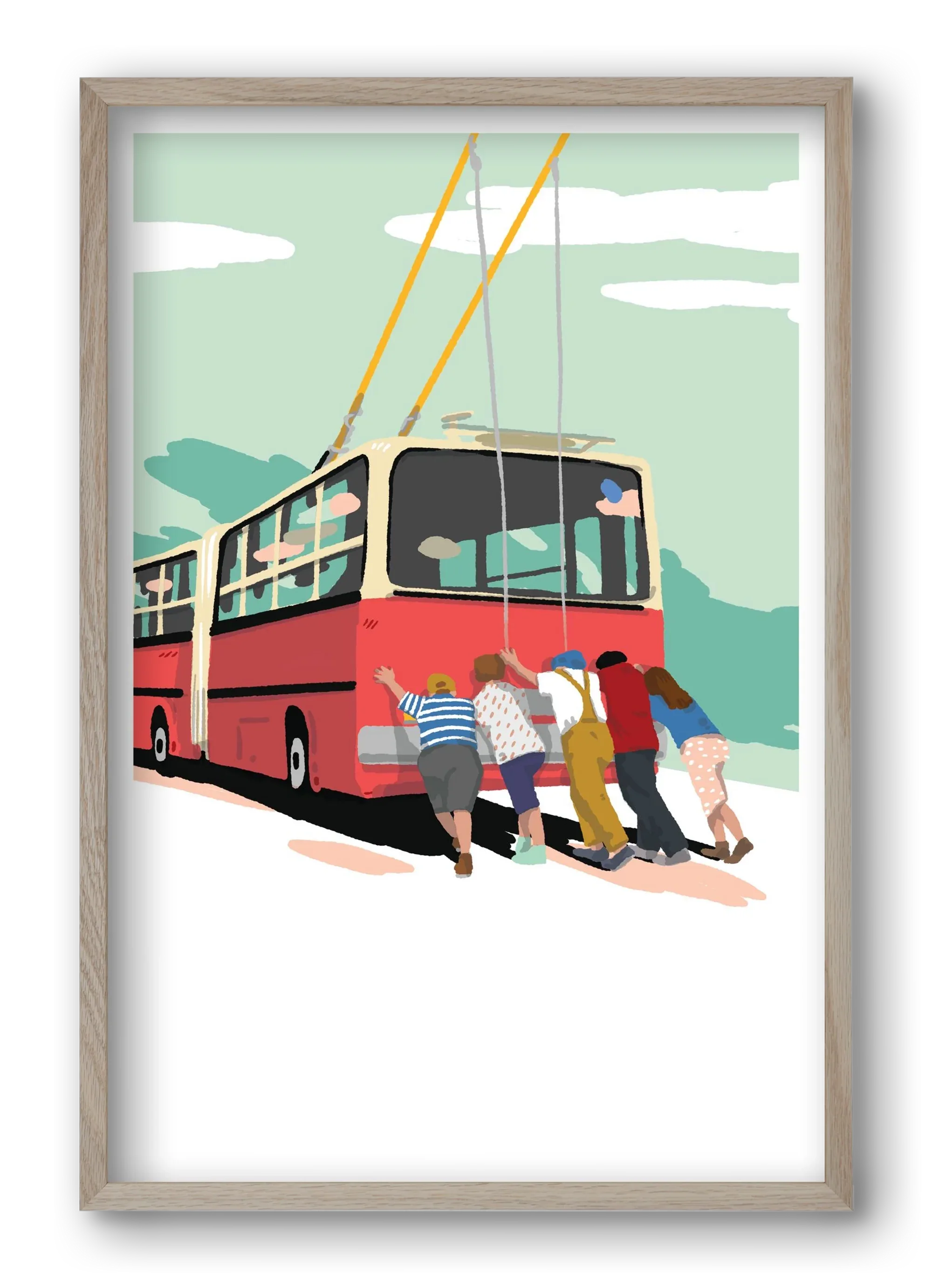



Imagine entering someone's home and being greeted by an exciting, colorful gallery wall on the wall that tells different stories. Guests stop in front of it, the pictures trigger thoughts and emotions in them. It means a little bit differently to everyone: it evokes a different mood, evokes different memories, and everyone sees it differently. But what's really special: the gallery wall also tells a story about you. It shows who you are, what inspires you, what's important to you - and this makes it easier for your guests to connect with you. Now think about it: what greets your guests in your home? A blank, white wall? Or a single, lonely picture? Maybe now is the time for your home to start telling a story too! If you don't have a gallery wall, you could be missing out on a lot! It's not just about decoration: a gallery wall adds personality, style, warmth, and a story to your home. And the best part: it's much easier to make than you think!
Why is it good to have a gallery wall?
A gallery wall gives your home a unique look – no one else will have exactly the same wall decoration as you. While large home improvement stores often offer the same mass-produced pictures and posters, a gallery wall you create yourself is guaranteed to be personal and unrepeatable. Not only does this create a special atmosphere, but you can also avoid seeing the same picture on a friend or acquaintance, which can be quite frustrating. Each piece of a gallery wall tells a story and is much more personal than any standard decoration. The for artbridge artists behind their creations are real people, feelings and inspirations – these pictures not only decorate, but also inspire you every day, and can even be imprints of your memories. This way, your wall will not only be beautiful, but also tell a story about you: it will show what is important to you, what you are like, and your guests will be able to relate to you more easily. The gallery wall can also be updated at any time: if you want a new mood, or spring is coming, you can simply replace the pictures with a fresh collection, or brighten up the wall with a Christmas selection. There is no need to re-drill or start a major renovation – you just take down the old picture and put up the new one, whether it is a new Artbridge print or poster. This flexibility is much easier than you might think, and allows your home to always reflect your current mood or the season.
What gallery wall layouts can you choose from?
One of the most exciting and important decisions when designing a gallery wall is the layout you choose. This will greatly determine the feel of the space and how well it fits into your home and personality.
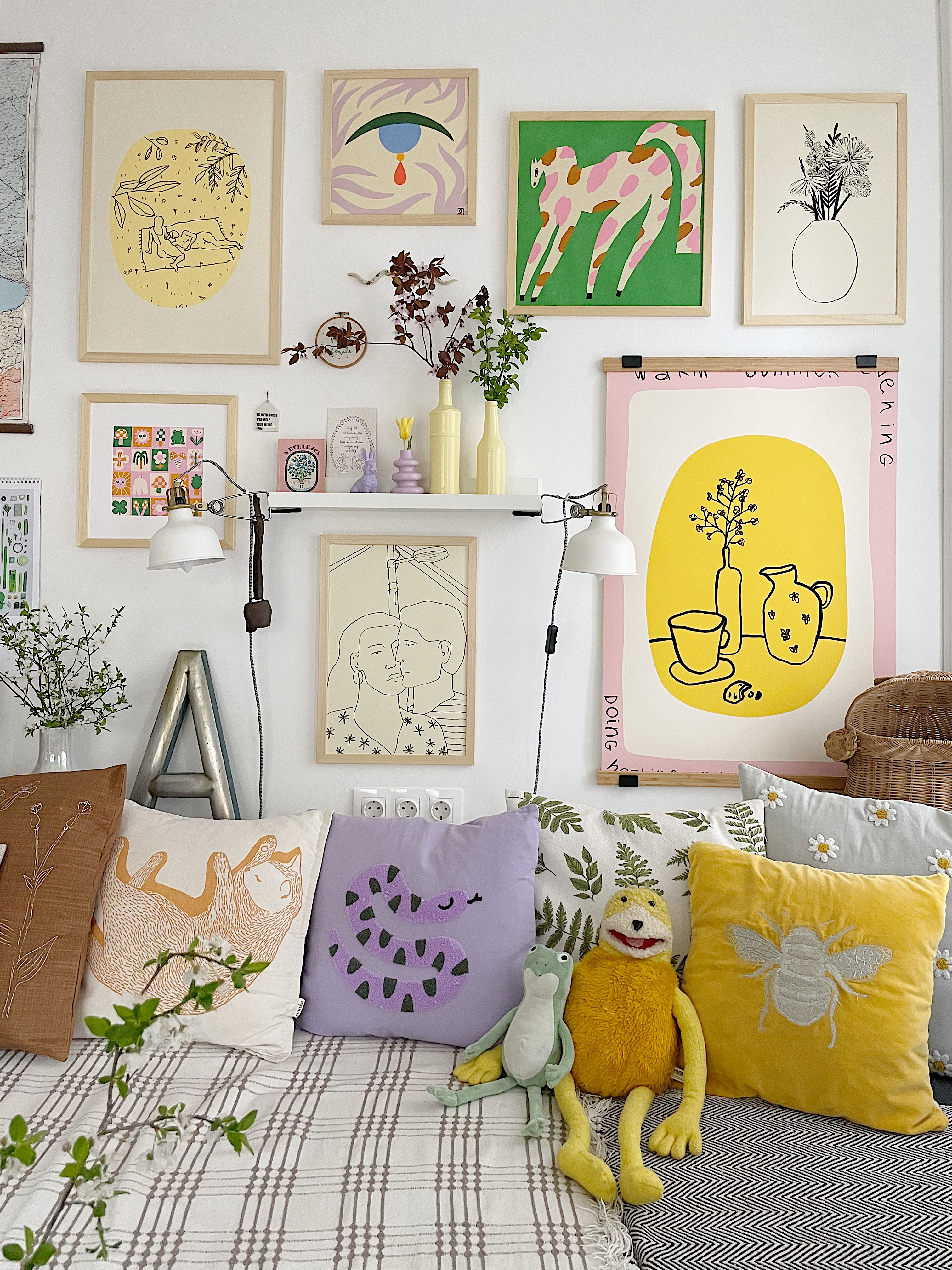
- "Chaos at its best"
One of the freest and most creative solutions is “chaos at its best”, or random arrangement. In this style, you place pictures, posters, and illustrations of different sizes, colors, and styles seemingly at random, yet striving for a kind of harmony. This type of gallery wall is for those who love playfulness and freedom, and who don’t shy away from having each picture on their walls convey a different mood or story. It looks especially good in bohemian, eclectic, or youthful homes, and is a great choice for a living room or bedroom, where you can really express your creativity.
2. Measured, grid layout
If you prefer clean, orderly spaces, then a measured grid layout might be your style. Here, pictures of the same size are arranged symmetrically and precisely in rows and columns. This solution looks really good in modern, minimalist or Scandinavian-style homes, where order, transparency and harmony are important. For example, such a gallery wall can be perfect for a study, office or even a dining room, where clarity and calm dominate.
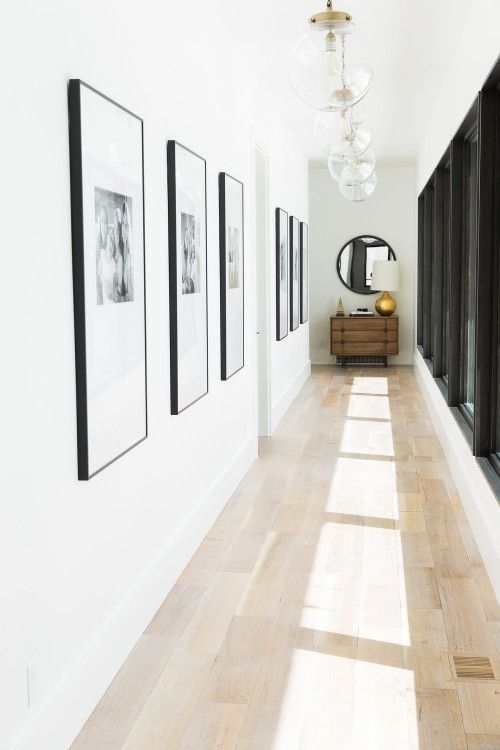
3. Staggered, grid layout
The third option is the staggered or grid layout, which works especially well in elongated spaces, such as hallways or stairwells. Here, the images follow an imaginary line, as if they were going up or down stairs, or they form a regular grid. This style brings dynamics to the space, guides the eye, and creates a particularly exciting effect in moving, transitional spaces. If you want your guests to encounter your personality right at the entrance or in the hallway, this solution can be a truly spectacular choice.
Remember, you don’t have to stick to just one layout style! Feel free to combine them in different rooms of your home: for example, you can have a playful, free-form gallery wall in the living room, a neat, symmetrical arrangement in the study, and a stepped row in the hallway or stairwell. The key is to choose a solution that suits each space and – more importantly – your own personality. This way, your gallery wall will be truly homey, unique, and true to you!
What is the ideal size for a gallery wall? – Sizing tips and golden rules
The size of your gallery wall is key to making it look impressive and harmonious. As a general rule, you should fill about two-thirds of your available wall space with your gallery wall – this way, it will be prominent enough to stand out, but it won’t overwhelm the space or seem lost on it. If your gallery wall is too small, it will easily get lost on the larger wall and look haphazard and unfinished, as if you’ve just hung a few pictures at random. On the other hand, if it’s too large, the whole space can feel cluttered and overwhelming, especially in smaller rooms.
The placement of the bottom edge of the pictures is also important: if the gallery wall is placed above furniture (such as a sofa, chest of drawers or bed), the bottom edge of the pictures should be approximately 15–20 cm above the top of the furniture. This creates a visual connection between the furniture and the wall decoration, so the pictures do not “float” on the wall, but become an integral part of the space. If the pictures are placed too high, the entire composition will fall apart, and it will be more difficult for the eye to find the connection between the furniture and the decoration. The gallery wall should be airy: leave at least 3–5 cm of space between the pictures so that each work can stand out and does not create a crowded effect.
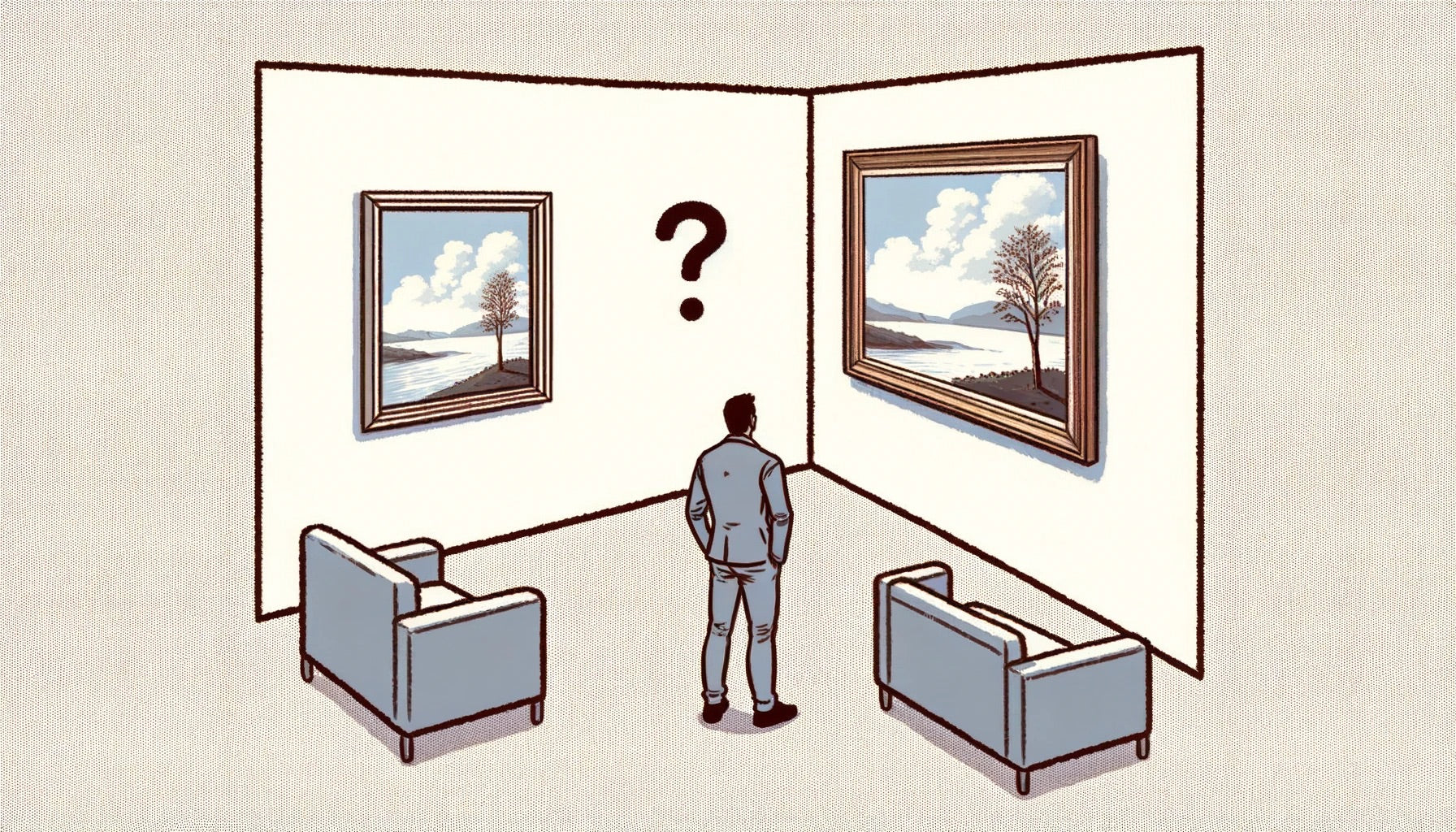
In smaller rooms, choose fewer, larger pictures, as too many small pictures can make the space feel even smaller. On larger walls, you can use several, smaller pictures, but always pay attention to proportions and an orderly arrangement. Another rule of thumb is to keep the center of the gallery wall at roughly eye level (usually 145–155 cm from the floor), so the pictures create a natural focal point.
So, your gallery wall will be truly harmonious if it is proportional to the wall surface, its layout is airy, and the placement of the pictures is in harmony with the furniture and eye level. This way, the end result will not only be spectacular, but also comfortable for everyone to view.
It is important to see that a gallery wall is not just a decoration, but the soul of your home, telling a story about you and connecting the space with your personality. A well-designed gallery wall is not only spectacular and unique, but also provides inspiration every day, starts conversations and creates a real homely feeling. Don’t let empty walls take away this opportunity – dare to play with styles, sizes and layouts and create a space that reflects you!
This post was the first part of a three-part series: in the next part we will help you choose images, artwork, and themes for your gallery wall, and in the third part we will show you step-by-step how to easily and professionally upload your selected images.
Join us and transform your home with a gallery wall – because every wall deserves to tell a story!