


Introducing Marine Tanguy The Visual Detox - How to consume media without letting it consume you c., published in 2024 by Penguin Random House UK. The book provides an introduction to evaluating our visual environment and provides methods for filtering content, making it easier to absorb and process information.
I am addicted, and I am not alone in this. Ever since I started an online business and had two young children, I have become addicted to social media. Like so many of us, the process was gradual, but it definitely started when I bought my first smartphone fourteen years ago. At first, I was very happy with the dizzying possibility of having the world in my pocket, and all the information and news coming to me instantly. Technology has really excited me (I see a similar enthusiasm for AI in many people recently). But now I have reached a point where the more I look for comforting screen content, the more tired and insecure I feel. I think this can be true for all of us, but there are situations in life that accelerate this social burnout, and being an entrepreneur with young children is definitely one of them.
So there came a point when I realized the dangers of being online and started looking for solutions. I didn't want my kids to see me with a phone in my hand or for that image to remain in their memory. At the same time, my job requires me to spend some time online, and I even have to actively search for emerging artists, new styles, and interesting work. That's why I can't completely withdraw from social media.
That's when I met Marine Tanguy The Visual Detox c. with his book. Marine is a successful London entrepreneur who sells art to individuals and municipalities through her agency. She is well-versed in the European art scene and is active on social media due to her work.
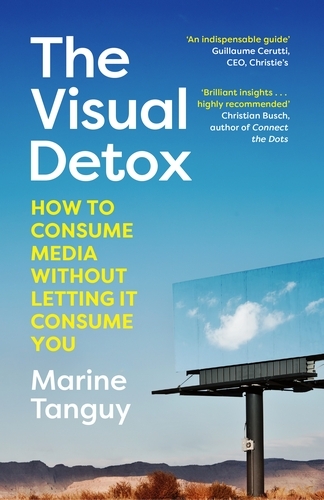
Marine Tanguy, The Visual Detox, How to consume media without letting it consume you, Penguine Random House UK
In his book, he gives insight into the history of his own visual development, explaining how our own artistic narrative is shaped by the surfaces, installations, and images around us. He offers tips on how to avoid living in a bubble and successfully filter the “things to see” so that they serve us, not the other way around.
He warns with shocking statistics: the average person sees 10,000 pieces of advertising content online every day, while our brains can only process 1% of what they see. Or that every 2 seconds 1,250,000 new images are uploaded to the world wide web. This is a state of massive overload for those who exist in the online space, and we haven't even talked about the offensive content on the streets and projectors. Anyone who wants to stay normal must filter and, by playing with the algorithms of social media apps, "swim against" the tide, only allow in very limited content. In addition to adblocker tools and various app filters, he recommends many methods, but one of the most important is to dare to consciously transform our homes and our environments into places where we can recharge and where our brains can rest from what we see online.
Everyone has a little idea why it's good to visually consume art, even if they don't dare go near it. A study has shown that the same brain mechanisms are activated when we immerse ourselves in an image we like as when we fall in love. It's no wonder that many artbridge customers start their emails to us by saying they're "in love" with this or that image! Every topic that interests us, globally or in our narrower community, interests artists, and their works help to highlight our perspective, make us think, or even provide a transcendent experience.
When we look at a work of art, it is worth taking the time to think about how its characteristics affect us – its size, its colors, where our attention is directed, its composition and perspective. What are the distances, the orientation of individual parts and characters? And these are just the elements that are immediately noticeable. Perhaps the most important point of view is the context: in what social environment, in what period was it made, is it thought-provoking, inclusive, stimulating to action, unifying, or the opposite? What we see in our everyday lives is our art, our personal gallery, which has a direct impact on how we feel. We need to start thinking about art differently, and instead of thinking that art is somewhere else and we can’t have anything to do with it, we need to consciously build our own visual story and place it in the artistic environment that we share with our fellow human beings. The desired goal may be to create a collective environment in which everyone is represented on posters, walls, and homes – an inclusive, democratic, and inspiring world,” says Marine Tanguy.
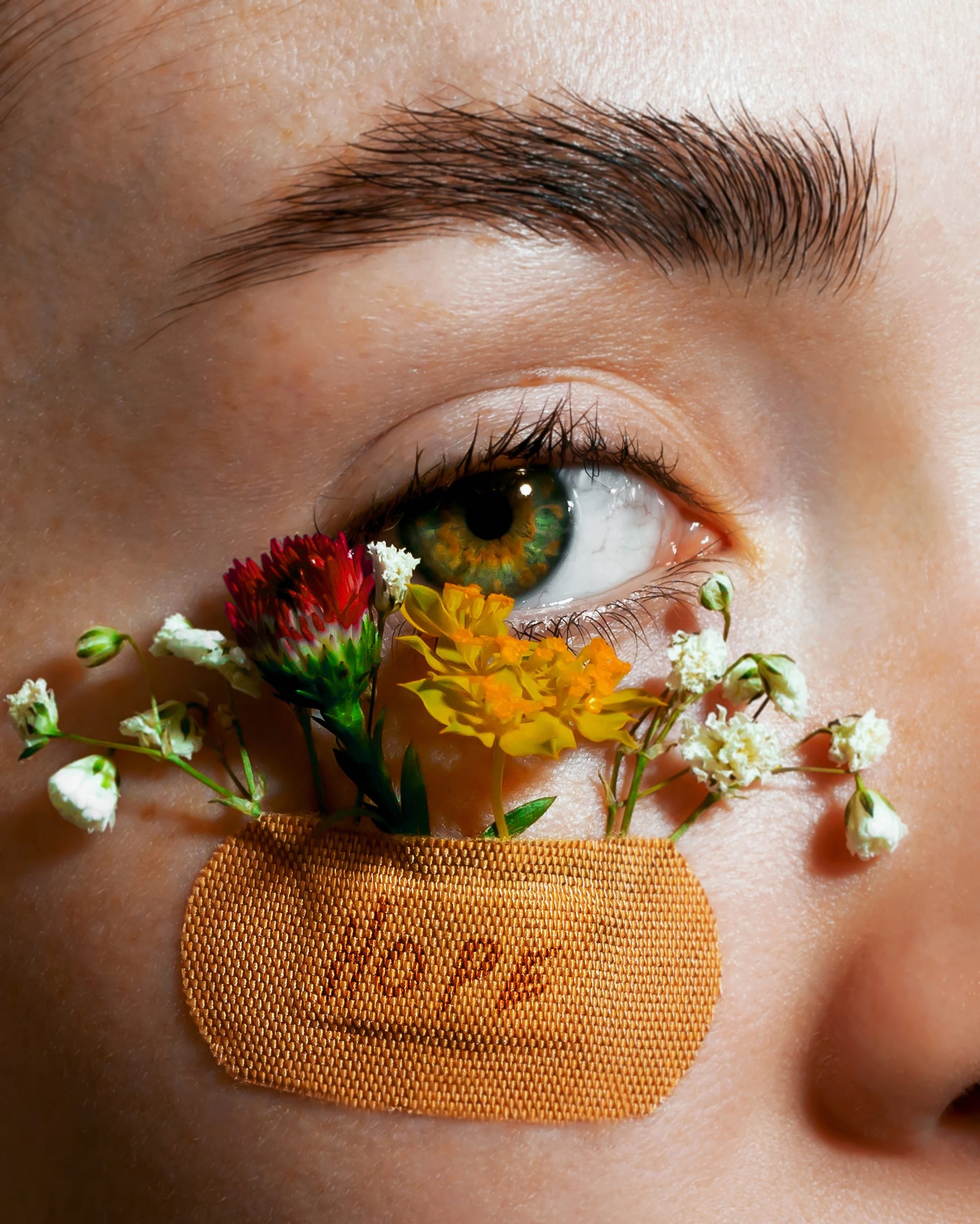
Claire Luxton: Hope, photo, 2019
The author examines in detail the purpose, contradictions, context, and hidden details of the content that surrounds us (physically and online). He practically provides an introduction to the world of art historians by sharing the concepts and perspectives that allow us to not only give ourselves a banal “like/dislike” assessment of an image, but also to analyze and look deep into it and evaluate what we see through our own filter. We can decide whether a given image and narrative serves us or is bad for us, which is why it is worth eliminating it from our environment. There is no “perfect” analysis for a work of art; everyone views the world through their own history, upbringing, and memories, which is why no two assessments and emotions are the same when it comes to human experiences.
Since today's people are drowning in content of all kinds, they can defend themselves with conscious decisions and "detoxifying" steps to maintain their independence and integrity. So let's look at some examples from Marine Tanguy's book on what we can do against the overflowing stimuli!
- Don't turn on your phone or look at a screen in the first and last hour of your day.
- Start noticing/recording how much time you spend online, in shopping malls, and outdoors each day.
- Clean your phone of all unnecessary apps, use an adblocker on all your internet devices.
- Take photos of your bedroom/kitchen/study and plan how you will transform it by removing unnecessary, unpleasant elements from the interior and adding new, pleasant things and images that have a positive effect on your mind!
- Consciously plan your visual schedule! After watching a movie or spending a lot of time on the screen, include relaxing activities for your eyes, such as reading a book or print media, or taking a walk in nature.
- Have days when you don't look at a screen at all!
- Avoid all content that is uninspiring, uninteresting, or that only evokes negative emotions. Instead, look for inspiring, beautiful content, profiles of museums, galleries, and artists.
- Spend 5 minutes every day with art! Go to a museum or gallery, find a piece of art that captivates you, and think about its characteristics, its message, and how it makes you feel.
- Finally, surprise yourself regularly with visual changes that bring you joy and calm. This could mean a new wallpaper on your phone, new pictures on your walls, or just rearranging your bookshelf by color.
- Initiate conversations about what you see around you and how you would like to shape your district or town in order to live in a more livable, beautiful, and sustainable environment!
Obviously, there are some of these points that we know and practice on our own, but if we apply them all at the same time, we can significantly reduce visual "garbage", thereby contributing to our well-being and general well-being. So be it!
Written by: Eszter Zborai, founder of artbridge